Introducing Arunika: A Gothic Display Typeface with a Modern Twist
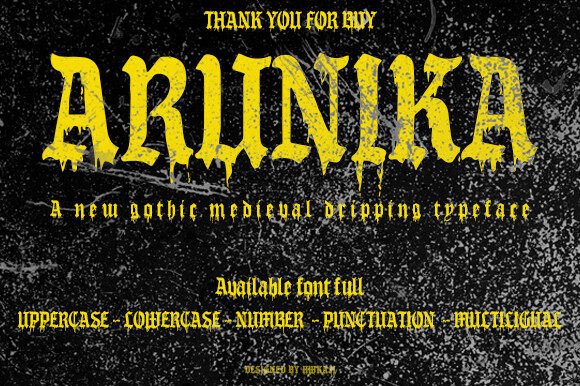
In the ever-evolving world of typography, new fonts emerge that not only redefine visual aesthetics but also align with shifting design expectations across industries. Arunika is one such typeface that stands out for its unique character and adaptability. Combining the dramatic flair of gothic lettering with a contemporary edge, Arunika offers designers a powerful tool to elevate their creative projects. Its compressed structure and whimsical dripping style make it an eye-catching choice for both short titles and extended text, bridging the gap between artistic expression and practical usability.
The Essence of Arunika: A Fresh Gothic Vision
Gothic display typefaces have long been revered for their bold, structured forms and expressive qualities. They are often associated with historical gravitas or dramatic storytelling. However, Arunika reimagines this classic category by introducing subtle modern elements that give it a fresh, dynamic presence. The font’s compressed width lends itself well to branding, packaging, editorial work, and digital media where space is at a premium yet impact is essential.
The dripping effect in Arunika adds an unexpected layer of personality. It evokes a sense of movement and fluidity while maintaining the sharpness and elegance characteristic of gothic styles. This makes it ideal for logos, posters, book covers, and other high-visibility applications where memorability is key. Unlike many traditional gothics that can feel rigid or overly ornate, Arunika balances strength with a touch of whimsy, making it more approachable without sacrificing its commanding presence.
Comprehensive Character Set for Global Use
Arunika is designed with versatility in mind. It includes full sets of uppercase and lowercase letters, numerals, punctuation marks, and extensive language support. This multilingual capability ensures that it can be used effectively in international markets, supporting a wide range of scripts and characters. Whether you're designing for English-speaking audiences or crafting content for global brands, Arunika adapts seamlessly to different linguistic needs.
This level of inclusivity reflects broader industry trends toward accessibility and localization. As businesses expand beyond borders and creators aim for wider reach, having a font that supports multiple languages becomes increasingly valuable. Arunika meets these demands head-on, offering a cohesive typographic experience across diverse contexts.
Why Arunika Is Capturing Attention in Creative Industries
Designers today are constantly on the lookout for fonts that offer both visual appeal and functional flexibility. Arunika has quickly gained traction because it addresses two critical aspects of modern design: distinctiveness and usability. In a market saturated with generic sans-serif and serif options, a font like Arunika brings a unique voice to the table—something that resonates strongly in branding, advertising, and editorial design.
One reason people are paying attention to Arunika is its ability to stand out without overwhelming the message. The dripping style draws the eye, but the clean lines and balanced proportions ensure readability. This duality makes it particularly effective in environments where first impressions matter, such as event promotions, luxury packaging, or website headers.
Moreover, Arunika appeals to professionals who value creativity and innovation. Its design encourages experimentation, allowing users to push boundaries in ways that traditional fonts might not. Marketers, for instance, use it to create headlines that cut through the noise, while entrepreneurs leverage its striking appearance to build brand identities that feel bold and memorable.
Trends Driving the Demand for Unique Typefaces
Several industry-wide trends are contributing to the growing popularity of typefaces like Arunika:
- Brand Differentiation: With so many businesses vying for attention, standing out visually is more important than ever. Arunika helps brands carve a distinct identity with its unconventional yet refined look.
- Minimalist Design Meets Bold Typography: While minimalist aesthetics dominate much of current design, there's a simultaneous appetite for strong, expressive type. Arunika fits perfectly into this trend by providing a bold statement within a compact form.
- Adaptation to Digital Spaces: The rise of mobile-first design and social media platforms means that fonts must perform well across various screen sizes and resolutions. Arunika’s structure is optimized for clarity and impact on digital displays, from websites to app interfaces.
- Cross-Disciplinary Creativity: Today’s creatives work across print and digital, requiring fonts that transition smoothly between mediums. Arunika’s design accommodates both, making it a versatile asset for multi-platform campaigns.
Practical Applications of Arunika in Real-World Projects
To understand why Arunika is gaining momentum, let’s look at some real-world examples where it has made an impression:
1. Branding and Logo Design
Many startups and boutique brands are turning to Arunika for their logo designs. Its condensed form allows for clear legibility even when scaled down, which is crucial for small business cards or social media profile icons. The dripping detail introduces an element of surprise and sophistication, helping brands appear both edgy and elegant.
Example: A fashion label recently adopted Arunika for its logo, using it in both large-scale billboards and tiny tags on clothing items. The result was a unified brand image that felt cohesive yet distinctive.
2. Editorial and Publishing
In publishing, especially in niche magazines and art journals, typography plays a pivotal role in setting the tone. Arunika is being used in magazine mastheads and article subheadings to evoke a sense of drama and depth. Its contrast between thick and thin strokes enhances hierarchy, guiding readers through content with ease.
Observation: When paired with a simpler body font, Arunika adds just the right amount of visual tension without distracting from the main text—a perfect balance for editorial layouts.
3. Packaging and Product Design
Product packaging is another area where Arunika shines. Luxury goods, especially those targeting younger demographics, benefit from its stylized yet readable nature. The font’s gothic roots lend it a timeless quality, while the modern compression keeps it relevant in today’s fast-moving retail environment.
Case Study: A skincare brand introduced Arunika on their product labels to convey a blend of tradition and innovation. Customers responded positively, noting the font’s “mysterious yet inviting” vibe aligned well with the brand’s ethos.
4. Web and UI/UX Design
In web design, Arunika serves as an excellent headline font. Its bold structure commands attention, making it suitable for hero sections, banners, and call-to-action buttons. The font’s compatibility with responsive design ensures that it maintains its integrity across devices, from desktops to smartphones.
Insight: When used sparingly, Arunika can elevate a website’s visual hierarchy without compromising load times or performance. This is especially important for marketers aiming to convert visitors quickly and efficiently.
Aligning with Changing Design Expectations
As user preferences evolve, so do the expectations placed on typography. Consumers now seek immersive and emotionally engaging experiences, whether they’re browsing a website, reading a book, or viewing a poster. Fonts must not only communicate information but also contribute to the overall mood and tone of the design.
Arunika meets these evolving expectations by blending emotional resonance with functional design. It doesn’t just look good—it feels good. The dripping style suggests a kind of fluidity and motion, subtly influencing how users perceive the content. This is particularly useful in storytelling formats, where the font can enhance narrative elements through its visual character.
Additionally, Arunika caters to the increasing demand for fonts that can adapt to different workflows. Whether you're working in Adobe Creative Suite, Figma, or any other design platform, Arunika integrates smoothly, reducing the need for constant tweaking or adjustments. This efficiency is a major plus for freelancers and agencies managing tight deadlines and multiple projects simultaneously.
Supporting Multilingual Content Strategies
Globalization has transformed how content is created and consumed. Businesses and creators now need to produce materials that resonate with audiences across cultures and languages. Arunika’s robust language support ensures that it remains a viable option in multilingual settings, from e-commerce sites to travel brochures.
Its ability to maintain stylistic consistency across different scripts is a testament to thoughtful design. For example, when used in German, Japanese, or Spanish contexts, Arunika retains its signature dripping effect and compressed form, delivering a uniform aesthetic regardless of the language being presented.
Arunika in the Context of Larger Typographic Developments
The emergence of Arunika reflects a larger shift in the typography landscape. There is a growing interest in hybrid fonts that merge historical influences with modern sensibilities. This trend is fueled by the desire for authenticity in design—audiences appreciate fonts that tell a story or reflect cultural heritage, but they also expect them to function in today’s digital ecosystem.
Furthermore, Arunika aligns with the rise of experiential design, where every visual element contributes to a holistic user experience. In this context, typography isn’t just about legibility—it’s about creating an atmosphere. Arunika does precisely that, adding a layer of intrigue and emotion to whatever it touches.
It also responds to the increasing importance of visual storytelling. Whether in marketing collateral, film titles, or album artwork, the font acts as a silent narrator, shaping the viewer’s perception before a single word is read. This makes it a favorite among artists and storytellers looking to amplify their message through design.
Future-Proofing Your Designs with Arunika
As technology continues to shape the way we interact with content, the need for adaptable and expressive fonts will only grow. Arunika is positioned to meet this need by offering a forward-thinking design that respects tradition while embracing innovation. Its compressed format is ideal for high-density screens, and its dripping details add a tactile quality that digital typography often lacks.
For entrepreneurs and marketers building online presences, Arunika provides a compelling way to differentiate their brand in a crowded digital marketplace. Its modern take on a classic style gives it broad appeal, ensuring it won’t become outdated quickly. In fact, the font’s uniqueness may help future-proof your designs against fleeting trends.
Conclusion
Arunika represents a thoughtful evolution of the gothic display typeface. By integrating a whimsical dripping style with a compressed structure, it offers a rare combination of boldness and functionality. Designed for professionals and creatives alike, it aligns with current trends in branding, editorial design, and digital media, while also supporting multilingual needs in a globalized world.
As the demand for distinctive, high-performing fonts continues to rise, Arunika stands out as a versatile and impactful choice. Its ability to adapt to different uses—from short headlines to long-form text—makes it a valuable addition to any designer’s toolkit. In an era where visual communication is more important than ever, Arunika delivers both substance and style, ensuring your message is seen and remembered.